Showing posts with label World Music. Show all posts

Saturday, 9 April 2016

X'Figolla Jrid

Lejla Maltija has just released a new track entitled 'X'Figolla Jrid?' The film and the song is about the traditional Maltese Easter sweet - Figolla and the custom of men trailing the statue of a risen Christ through the streets as fast as they can dare, cheered on by the crowds. The 'Figolla' is an almond filled pastry often in the form of animals or whatever one may fancy. Keeping the person or child who will receive the sweet in mind, they can accordingly take on the shape of a car or a musical instrument, a character from a fairy tale or a romantic heart. The traditional lamb has now been replaced with football team emblems, even what they call 3D shapes taking over the flat sweet. 
 
Has anyone asked the risen Christ the question 'Which shape of Figolla would you like?'
This is the ironic tale behind the tune in Maltese.

'X'Figolla Jrid?' was recorded at Anidroc Studios and produced by A.M.P. for Lejla Maltija.
Performed by Lejla Maltija.
Music and Lyrics by Mario Cordina for Lejla Maltija

The lyrics in Maltese are by Mario Cordina together with an English translation come below.

X’ Figolla Jrid?

Min jaf L’Irxoxt, x’ figolla jrid?
Issa li nizel minn fuq is-salib.
Ħarġuħ jiġri matt-toroq kollha,
Qalb iċ-ċapċip u’ l-briju tall-folla.

(Who knows which figolla the resurrected Christ wants? Now that he has come down from the cross. They took him out running through all the streets, through the cheering and merriment of the crowds.)
Ġanni jrid figolla fill-forma ta kitarra,
Maria trid sirena,
Qalb bill-bajda taċ-ċikkulata għaz-zija Ċett,
Lin-neputija għamiltilha farfett.   

(Ganni i.e. Joseph, wants a figolla in the shape of a guitar. Maria wants a mermaid. A heart with a chocolate egg for Auntie Cett
and a butterfly, I made for my niece.)


Min qadd saqsiegħ?
X’figolla Jrid?

(Whoever asked Him,
Which Figolla he prefers?)

The video for 'X'Figolla Jrid' is an Anidroc Film for Lejla Maltija. It features the Easter Celebrations in Malta with figollas and the Statue of the Risen Christ tradition in the cities of Bormla, Birgu, Isla and Mosta. An A.M.P. production 2016. All rights reserved.


Photos by Jagoda Beltrani.
Figollas by Anthony Cordina and Jagoda Beltrani.
Pisanki by Jagoda Beltrani.

Monday, 8 September 2014

L'Aħħar Sajda by Lejla Maltija

Lejla Maltija has released l'Aħħar Sajda  today 8th September 2014.


The track was recorded at Anidroc Studios and the video for the song was produced by Anidroc Film for Lejla Maltija. This is an A.M.P. production. All rights reserved.

Below is some information about the track, the story behind it, the lyrics, and the track itself on sound cloud. Finally there is information and pictures about the making and filming of the video and the video itself.


L'Aħħar Sajda is the classical story of the Old Man and the Sea, where the fisherman meets his fate. The title of the song means 'The Last Fishing' trip. Alas, although this is not based on a true story, it is inspired by many such accounts from the history of fishermen around the island, especially in Marsaxlokk which is Malta's largest fishing village, even to the present day. The seas around Malta are beautiful and calm, but the islanders all know that the sea has a soft belly but a hard headed stomach. 'Zaqqu ratba imma rash iebsa', so they say. Here are the lyrics with as faithful a translation as possible in English.

L’Aħħar Sajda 
Lejla Maltija 
Kliem (lyrics) : Mario Cordina 

Għajnejn il-luzzu lemħu fil-baħar,
Il-konżijiet lesti għall-kalar,
Imma is-sajjied kollhu sabar,
Jaqra il-ħin maż-żifna tal-qamar.

The eyes of the luzzu, glimpsed on the sea (the Maltese luzzu a traditional fishing boat always is embellished with an eye on either end of the prow, a custom hailing from Malta's Phoenician and pagan past.)
The konzijiet (gill nets or seines) ready for hauling,
But the fisherman is all patience,
He reads the time in the dance of the moon.

Jaf li bil-lejl tiċċassa il-lampuka,
Araħ irejjex mal-kanniżżata.
Hekk kif titkala ix-xibka,
Il-kurtuni jintlew xalata.

He knows that the lampuka (dolphin fish) stares at night, (is less lively at night.)
See him feathering next to the kannizata, (using the feather to skim the surface. This is a method used by fishermen to lure the dolphin fish. The kannizata is a bait assembly common amongst Maltese fishermen.)
As soon as the net is pulled up,
See the kurtuni fill up with the feast. (The kurtuni are special wooden canals built both to support the hull and to hold the fish.)

Terġa tkala u terfa,
Il-ħut jaqbeż, jaqbeż, jitfarfar.
Itfa ix-xibka u irranġa,
Il-ħut jaqbeż, jaqbeż, jitfarfar.
Imma kollox għalxejn.

Once again you haul and you lift,
The fish jumps, jumps and wriggles.
Throw back the net and arrange it properly.
The fish jumps, jumps and wriggles.
But it all is in vain.

Tela il-mewġ, jonfoħ ir-riħ,
Il-luzzu sabet il-qiegħ.
L-aħħar sajda misset ix-xiħ,
Fl’ aħħar is-sajjied sab il-mistrieħ.
L’aħħar sajda, l’ahhar sajda,
Fl’ aħħar is-sajjied sab il-mistrieħ.

The waves rose, the wind blew,
The luzzu found the bottom (of the sea)
The fisherman found his fate on this last fishing trip,
This last fishing trip, this last fishing trip.
At last the fisherman found peace / rest. 

Qalb il-paġell, il-gambli u iċ-ċeren
Id-dott u ‘l mazzola il-luzzu tistkenn.
Ħaru ix-Xlukkajri, imniktin,
Ifittxu is-sajjied li ħadhu il-bambin.

Amongst the pagell (common pandora fish), the gambli (shrimps) and ceren (dusky grouper fish)
Id-dott (grouper fish), and the mazzola (piked dogfish) the luzzu is sheltered.
The Xlukkajri (local people of Marsaxlokk), ran out in grief,
Looking for the fisherman that God (Little Jesus) had taken away.

Tela il-mewġ, jonfoħ ir-riħ,
Il-luzzu sabet il-qiegħ.
L-aħħar sajda misset ix-xiħ,
Fl’ aħħar is-sajjied sab il-mistrieħ.
L’aħħar sajda, l’ahhar sajda,
Fl’ aħħar is-sajjied sab il-mistrieħ.

The waves rose, the wind blew,
The luzzu found the bottom (of the sea)
The fisherman found his fate on this last fishing trip,
This last fishing trip, this last fishing trip.
At last the fisherman found peace / rest. 

Id-dgħajsa li ħarget tfittxu,
Taqbeż, taqbeż titfarfar,
Imma kollox għalxejn.
Għalxejn.

The dghajsa (another type of Maltese boat) that went out to look for him,
It jumps and jumps and wriggles,
But it all is in vain,
In vain.

Now you can listen to L'Aħħar Sajda on the link below


The video for L'Aħħar Sajda below, is available on youtube and was filmed in Marsaxlokk Malta and the National Aquarium in Bugibba Malta by Anidroc Film for Lejla Maltija.


Saturday, 3 August 2013

Ix-Xalata


Ix-Xalata is Lejla Maltija's new song. The Maltese summer is a time for celebration. Almost every Parish Church celebrates the feast of it's patron saint. The large number of Churches means that there could be as many as four or five of these feasts per weekend. The feast includes brass bands parading through the streets of the Parish starting on Friday evening, Saturday Morning and Evening with the solemn Parish procession on Sunday. Traditionally the parishers take a day off the following Monday to invade the beach for a full day. The trip to the beach would take a long time as the buses - ix-xarabank were slow and the roads rough. For islanders living in the centre or in the south - the sandy beaches of Mellieha were far away and not an everyday option. This meant that Ix-Xalata was a grand affair with people carrying bags of food and drink, umbrellas, together with their children and neighbours, finally invading the beach till sunset.         


Ix-Xalata

Mgħobbi ix-xarabank,
It-Tnejn filgħodu ta wara il-festa ta l-Annunziata
Mhux ghal gwerra dan it-tank,
Armat bil-qoffi u l-umbrellel għax-xalata

Ix-Xalata

Mgħobbi ix-xarabank,
Nieżel in-niżla ta Alla u Ommu lejn il-bajja tal-Mellieħa,
Igerger qisu tank,
Imma ir-raħlin ma jagħtux kasu f’ din il-ġurnata hekk sabiħa.

Ix-Xalata

It-tnejn ta wara il-festa,
Tal-paroċċa kollha lesta,
Biex jiċċelebraw, u jixxalaw,
Jqajmu il-bajja qishom tempesta.

Lyrics by Mario Cordina for Lejla Maltija


Sunday, 30 June 2013

Il-Guvni Hasan


Lejla Maltija has published it's first official recording entitled "Il-Guvni Hasan" It is about the well known Legend connected to the cave known as "Ghar Hasan" off Birzebbugia in Malta. There is a new twist to this tale - age old enemies The Turk and the Maltese are foiled by a Romeo and Juliet tragic love affair. A Turkish youth, Hasan, falls in love with a Maltese girl. There is no way that either party will agree to such a bond, so he kidnaps her. She tries to escape, but to no avail. In the song the girl appeals to Hasan to set her free because if her father finds them, Hasan would surely be hanged. Indeed the islanders do find the couple in their cave. "Il-ġuvni Ħasan, iben l-għedewwa," 'the young man Hasan, the enemy's son,'  "il-mewt ħaqqu sewwa," 'he really deserves to die.' Hasan runs to the edge of the cave which overlooks a sheer drop to the sea and ends his life on the treacherous rocks below. The girl follows suit. "Ġrajja ta dieqa, imħabba u żgħożija." A story of sorrow, love and youth, a story of man's folly.
In Maltese the lyrics by Mario Cordina go as follows: 

Il-Ġuvni Ħasan


Ra tfajla ħelwa u żgħażugża, Ħasan.
Mill l’ewwel ħa grazzja magħha, Ħasan.
Waħħala f’rasu li jisraqha, Ħasan,
F’għar imwarrab mar ħabiha, Ħasan.

It-tfajla bdiet tibki,
“Missieri ifittixni,
U meta jsibni,
Ser jonxroq żgur, ħallini mmur.”

”Naf li togħbodu it-Torok,” qalla Ħasan,
”Imma jien lilek inħobbok,” qalla Ħasan
It-tfajla bħall-peprina,
Ħamra u samranija,
Qed nisma il-passi,
Ħasan ġejjien, Ħasan miskin.

Il-ġuvni Ħasan, iben l-għedewwa,
Il-ġuvni Ħasan, il-mewt ħaqqu sewwa

Fil-fixla imwerwer gera lejn ix-xifer, Ħasan
Qabeż għall-isfel għall-fuq il-blat kiefer, Ħasan

L’ istorja tispiċċa,
Bid-dmugħ fuq wiċċa,
Bikkmet is-sajf
Hekk kif qabżet warajh
Iva qabżet warajh.

Il-ġuvni Ħasan, u ix-xebba Maltija
Ġrajja ta dieqa, imħabba u żgħożija

Monday, 10 June 2013

Il-Passi

Lejla Maltija has published another instrumental based on Maltese tunes called il-Passi. The steps taken by Maltese people in their long and enchanting history. The video, produced by Anidroc portrays the wandering paces of a solitary walker through the island of Malta. The music is performed by Mario Cordina for Lejla Maltija and recorded at Anidroc Studios.


Check out these photos used for the video above

Anidroc's Il-Passi album on Photobucket

Sunday, 5 May 2013

Qalb il-Buzbiez


Qalb il-Buzbiez is an orginal tune by Lejla Maltija performed by Mario Cordina on the flute. Pictures by Anidroc.
The wooden flute is one of Malta's folk instruments as is the case with most ancient cultures.The tune is based on Maltese traditional flute harmonies. The pictures are mounted in such a way as to draw attention to the various instruments playing together in this piece. Try to follow which instrument is being emphasised by the pictures.


Buzbiez is the word for fennel. A herb that can be found everywhere on the islands of Malta and a favourite with pasta and sea food dishes. 
The word 'Qalb,' means amongst, at the heart of the fennel. Wied il-Buzbiez is the name of a valley off the limits of Dingli and Rabat. Il-Farfett tal-Buzbiez, an indigenous butterfly, so called because the fennel is its preferred feeding source, is in danger of extinction and has been brought under UNESCO protection.  


Saturday, 27 April 2013

Quccarina Addolorata Cemetery.


Quccarina is the old spelling of the Maltese word for tea-spoon. Inspired by a tea spoon vibrating on the guitar in such a way to create a specific sound this is Lejla Maltija's first official recording. Performed by Mario Cordina and recorded at Anidroc Studios, this is an experiment in sound using classical instruments. The video is dedicated to the Addolorata Cemetry near Rahal Gdid and Tarxien. Photos taken by Ramon Casha. Filming  by Ania Cherry Wisnia in collaboration with Kamera NGO. A new Anidroc production

Quccarina: "Playing the guitar using a spoon, requires practice and a little imagination. It turns this string instrument into a percussive one. The melody is inspired by Maltese funeral dirges. The technique was basically inspired by my need to experiment." Mario Cordina 


The guitar must be placed face down and the left hand must hold the chords or notes as in normal guitar use, although the grip needs to be tighter. The right hand delicately hits or rolls or scratches the strings to achieve the desired effect and hit the right note.


Addolorata Cemetry is not a usual stop on a tourist's itinery. It is actually close to one of Malta's greatest attractions, The Tarxien Prehistoric Temples and right on the road to other hotspots, like the sea side village of Marsaxlokk with it's fish market and dainty boats, to Ghar Dalam, a prehistoric cave and to many other places of interest. However Addolorata Cemetry is a unique gem in its own right. 


Built between 1862 and 1868 on Tal-Horr hill which had already been a burial ground since prehistoric times, this monumental cemetery the largest on the islands, has a beautiful Gothic Chapel unique in Malta. From 1869 onwards, burials in churches were prohibited except for special cases as Bishops and Cloistered nuns. This cemetery is full of old Mausoleums and statues in marble and bronze and also contains 268 commonwealth graves from the two world wars.The chapel is run by the Capuchin friars of Marsa under the Authority of the department of Health. Its architect was E.Luigi Galizia, the same person who designed the Ta Braxia Protestant cemetery.

Interestingly the Addolorata was not meant to be a national cemetery but rather a burial place mostly for the towns and villages in the vicinity which had no burial grounds of their own. There was also a reluctance to use it at first and no one was buried here for the first few years of its existence.  Today over 200,000 people are interred here.. 
The Addolorata can perhaps be called a monumental cemetery because of its exceptional use of topography - with the cemetery planned very symmetrically around a hill with the main chapel at the apex. There is a dearth of impressive monuments although the western side of the cemetery has quite a few beautifully designed, privately owned chapels.

The starting point was the Dominican chapel where the nun Teresa Parlar was buried in 1927. Parlar was known as something of a mystic in her time and was controversially reputed to have eaten little if anything from the age of eight - surely a record as far as hunger strikes go.  Parlar got into some trouble with the colonial authorities because of her saintly reputation and she was for a time hospitalized and put under observation. Today she is all but forgotten.

One of the stranger curiosities is the tomb of a business family from Marsa whose crest is a tower. The tower is reproduced on the tomb and the family apparently chips a block off the tower every time a member dies.


Perhaps the most poignant monument is the one put up by a travelling businessman who, upon his unexpected return from abroad, so surprised his mother that she apparently died suddenly on seeing him. This is one of the finest sculptures at Addolorata even though it still has shrapnel damage (visible lower right in the photo above) when a bomb exploded nearby in the Second World War.

Also of artistic merit is the Sette Giugno monument which recalls the 1919 riots and contains the remains of four of the victims. The monument was designed by the Russian émigré artist Boris Edwards and recalls the style of our own Antonio Sciortino. Incidentally the cemetery did contain a few funerary sculptures by Sciortino himself but these have apparently all been stolen.  An interesting article on Boris Edwards can be found here.

One other oddity is the tomb of an unfortunate boy who was killed by a fallen brick. The actual brick that killed him was incorporated in the statue adorning his tomb. Incidentally the unlucky boy was nowhere near as ugly as the tifel tal-precett represented on the tomb.
 
A last oddity and infamy - there is apparently only one illegally dug tomb in the whole cemetery and this belongs to a deceased former politician who was notorious enough in his life. It is not pretty to speak ill of the departed but to carry one's arrogance into the next life is something else…

Thursday, 25 April 2013

Lejla Maltija Il-Bidu


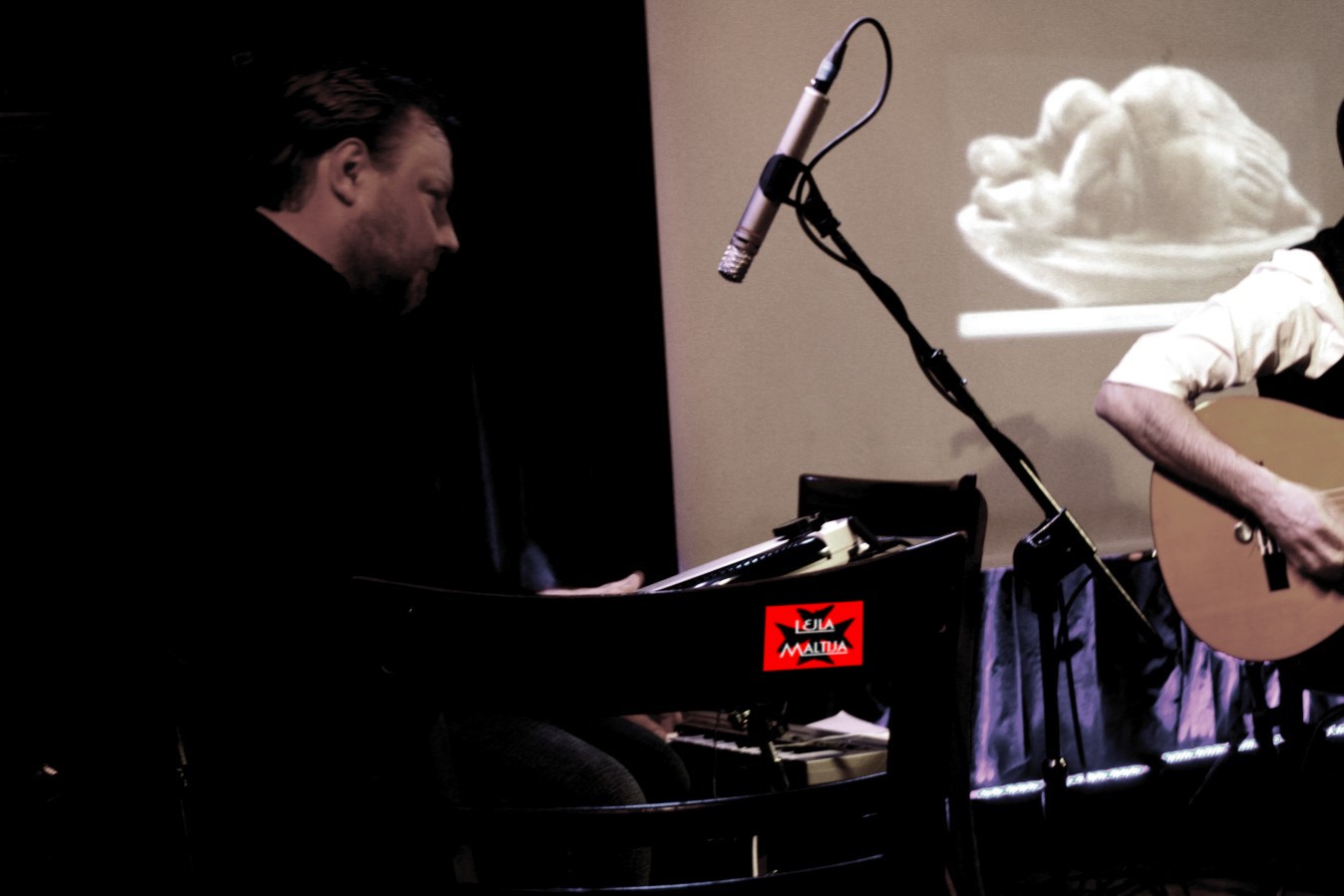
Lejla Maltija powered by Mario Cordina has burst into life with a premier concert of original music, folklore, visuals, information and food from Mario's native island Malta. Performed live at Rocker club in Szczecin, it has proved to be a success and who knows where they will go from here.

The music concept is to combine Maltese folklore and musical themes into different genres, give it a more contemporary feel to attract today's audiences. The lyrical content is about Malta's past. legends, customs, folklore, especially about traditions lost or dying out. Together with the visuals chosen, this is an attempt to educate and demonstrate that Malta has more than just beaches and sun to offer foreigners. A proud declaration from an island nation from a Maltese citizen abroad.   

Lejla Maltija is:

Mario Cordina on vocals and guitars, 'Hose' Jacek Lesiak on bass, 'Roderigo' Krzysztof Baranowski on keys and percussion, 'Manwel' Matek Mater (Mateusz Lazar) on guitars.
Check out more photos at Lejla Maltija Photos at Rocker Club

Another Anidroc Production.