Showing posts with label Anidroc. Show all posts

Wednesday, 1 June 2016

L'Gherien

A new video and track release by Lejla Maltija. 'L'Għerien' is a song about the mystery and history within the caves and grottoes of Malta. An original Lejla Maltija track, the music is by Mario Cordina recorded at Anidroc Studios. The Video is obviously filmed in Malta by Anidroc Film for Lejla Maltija. The locations include Għar Dalam, the cave filled with prehistoric remains and the Blue Grotto in Żurrieq with it's red coral and crystal clear waters. The fauna and fish were filmed at the Malta National Aquarium in Bugibba.

The Music
Based on Maltese melodic chords, it is dominated by guitars and hand claps for percussion. Most of the instruments are performed by Mario Cordina together with the vocals. The instruments include the zaqq, a Maltese bagpipe instrument made out of sheepskin, bass and a bass drum which is basically a chair cushion. The music is by Lejla Maltija under the A.M.P. label. All rights reserved.

The Video
An Anidroc Film for Lejla Maltija the video is  directed by Mario Cordina and Jagoda Beltrani. The video shows one of the many daily boat trips round the Blue Grotto and other caves in the area, together with fish and fauna in the Malta National Aquarium in Buġibba. The intro and ending feature the Għar Dalam cave with it's bones and skeletons from a prehistoric age. The video ends with Mario humorously tapping an aquarium glass seemingly hypnotising the fish and the boat trip guide inviting the tourists to check out the echo in the Blue Grotto interior.   

The Lyrics
L'Gherien
Mario Cordina

L'Għerien
L'Għerien tal-Maltin, bil-koral imdawlin
Ilma ċar, ilma pur,
Min din l'art bniet is-sur
Madwar dawn ix-xtut,
kenn u skiet, kenn u skiet
Naqra serħan għal-ħut

Translation
The Caves
Mario Cordina

The Caves
The caves of the Maltese people, lit up by coral.
Clear water, pure water,
From these the earth built it's bastions,
Around these coastlines,
Shelter and quiet, shelter and quiet,
A little bit of rest for the fish.

Watch the Video

Saturday, 9 April 2016

X'Figolla Jrid

Lejla Maltija has just released a new track entitled 'X'Figolla Jrid?' The film and the song is about the traditional Maltese Easter sweet - Figolla and the custom of men trailing the statue of a risen Christ through the streets as fast as they can dare, cheered on by the crowds. The 'Figolla' is an almond filled pastry often in the form of animals or whatever one may fancy. Keeping the person or child who will receive the sweet in mind, they can accordingly take on the shape of a car or a musical instrument, a character from a fairy tale or a romantic heart. The traditional lamb has now been replaced with football team emblems, even what they call 3D shapes taking over the flat sweet. 
 
Has anyone asked the risen Christ the question 'Which shape of Figolla would you like?'
This is the ironic tale behind the tune in Maltese.

'X'Figolla Jrid?' was recorded at Anidroc Studios and produced by A.M.P. for Lejla Maltija.
Performed by Lejla Maltija.
Music and Lyrics by Mario Cordina for Lejla Maltija

The lyrics in Maltese are by Mario Cordina together with an English translation come below.

X’ Figolla Jrid?

Min jaf L’Irxoxt, x’ figolla jrid?
Issa li nizel minn fuq is-salib.
Ħarġuħ jiġri matt-toroq kollha,
Qalb iċ-ċapċip u’ l-briju tall-folla.

(Who knows which figolla the resurrected Christ wants? Now that he has come down from the cross. They took him out running through all the streets, through the cheering and merriment of the crowds.)
Ġanni jrid figolla fill-forma ta kitarra,
Maria trid sirena,
Qalb bill-bajda taċ-ċikkulata għaz-zija Ċett,
Lin-neputija għamiltilha farfett.   

(Ganni i.e. Joseph, wants a figolla in the shape of a guitar. Maria wants a mermaid. A heart with a chocolate egg for Auntie Cett
and a butterfly, I made for my niece.)


Min qadd saqsiegħ?
X’figolla Jrid?

(Whoever asked Him,
Which Figolla he prefers?)

The video for 'X'Figolla Jrid' is an Anidroc Film for Lejla Maltija. It features the Easter Celebrations in Malta with figollas and the Statue of the Risen Christ tradition in the cities of Bormla, Birgu, Isla and Mosta. An A.M.P. production 2016. All rights reserved.


Photos by Jagoda Beltrani.
Figollas by Anthony Cordina and Jagoda Beltrani.
Pisanki by Jagoda Beltrani.

Wednesday, 1 October 2014

Is-Sirena Video for Lejla Maltija

Lejla Maltija has posted its video for Is-Sirena out on September 12th.
The video was shot in Malta and mainly features a re-enactment  held at the Saluting Battery below the Upper Barakka Gardens in Valletta Malta, together with shots taken inside the Lascaris War Rooms and Air Raid Shelters around Valletta. The Lascaris War Rooms consist of an underground complex of tunnels and chambers that housed the War Headquarters from where the defence of Malta was conducted during the Second World War. For more info about The Lascaris War Rooms use this link. Obviously the video also features Mario Cordina who is the lead singer and heart behind Lejla Maltija. The Video is an A.M.P. production for Lejla Maltija. The track is an Anidroc Production for Lejla Maltija. Recorded at Anidroc Studios 2014. All rights reserved.

Monday, 8 September 2014

L'Aħħar Sajda by Lejla Maltija

Lejla Maltija has released l'Aħħar Sajda  today 8th September 2014.


The track was recorded at Anidroc Studios and the video for the song was produced by Anidroc Film for Lejla Maltija. This is an A.M.P. production. All rights reserved.

Below is some information about the track, the story behind it, the lyrics, and the track itself on sound cloud. Finally there is information and pictures about the making and filming of the video and the video itself.


L'Aħħar Sajda is the classical story of the Old Man and the Sea, where the fisherman meets his fate. The title of the song means 'The Last Fishing' trip. Alas, although this is not based on a true story, it is inspired by many such accounts from the history of fishermen around the island, especially in Marsaxlokk which is Malta's largest fishing village, even to the present day. The seas around Malta are beautiful and calm, but the islanders all know that the sea has a soft belly but a hard headed stomach. 'Zaqqu ratba imma rash iebsa', so they say. Here are the lyrics with as faithful a translation as possible in English.

L’Aħħar Sajda 
Lejla Maltija 
Kliem (lyrics) : Mario Cordina 

Għajnejn il-luzzu lemħu fil-baħar,
Il-konżijiet lesti għall-kalar,
Imma is-sajjied kollhu sabar,
Jaqra il-ħin maż-żifna tal-qamar.

The eyes of the luzzu, glimpsed on the sea (the Maltese luzzu a traditional fishing boat always is embellished with an eye on either end of the prow, a custom hailing from Malta's Phoenician and pagan past.)
The konzijiet (gill nets or seines) ready for hauling,
But the fisherman is all patience,
He reads the time in the dance of the moon.

Jaf li bil-lejl tiċċassa il-lampuka,
Araħ irejjex mal-kanniżżata.
Hekk kif titkala ix-xibka,
Il-kurtuni jintlew xalata.

He knows that the lampuka (dolphin fish) stares at night, (is less lively at night.)
See him feathering next to the kannizata, (using the feather to skim the surface. This is a method used by fishermen to lure the dolphin fish. The kannizata is a bait assembly common amongst Maltese fishermen.)
As soon as the net is pulled up,
See the kurtuni fill up with the feast. (The kurtuni are special wooden canals built both to support the hull and to hold the fish.)

Terġa tkala u terfa,
Il-ħut jaqbeż, jaqbeż, jitfarfar.
Itfa ix-xibka u irranġa,
Il-ħut jaqbeż, jaqbeż, jitfarfar.
Imma kollox għalxejn.

Once again you haul and you lift,
The fish jumps, jumps and wriggles.
Throw back the net and arrange it properly.
The fish jumps, jumps and wriggles.
But it all is in vain.

Tela il-mewġ, jonfoħ ir-riħ,
Il-luzzu sabet il-qiegħ.
L-aħħar sajda misset ix-xiħ,
Fl’ aħħar is-sajjied sab il-mistrieħ.
L’aħħar sajda, l’ahhar sajda,
Fl’ aħħar is-sajjied sab il-mistrieħ.

The waves rose, the wind blew,
The luzzu found the bottom (of the sea)
The fisherman found his fate on this last fishing trip,
This last fishing trip, this last fishing trip.
At last the fisherman found peace / rest. 

Qalb il-paġell, il-gambli u iċ-ċeren
Id-dott u ‘l mazzola il-luzzu tistkenn.
Ħaru ix-Xlukkajri, imniktin,
Ifittxu is-sajjied li ħadhu il-bambin.

Amongst the pagell (common pandora fish), the gambli (shrimps) and ceren (dusky grouper fish)
Id-dott (grouper fish), and the mazzola (piked dogfish) the luzzu is sheltered.
The Xlukkajri (local people of Marsaxlokk), ran out in grief,
Looking for the fisherman that God (Little Jesus) had taken away.

Tela il-mewġ, jonfoħ ir-riħ,
Il-luzzu sabet il-qiegħ.
L-aħħar sajda misset ix-xiħ,
Fl’ aħħar is-sajjied sab il-mistrieħ.
L’aħħar sajda, l’ahhar sajda,
Fl’ aħħar is-sajjied sab il-mistrieħ.

The waves rose, the wind blew,
The luzzu found the bottom (of the sea)
The fisherman found his fate on this last fishing trip,
This last fishing trip, this last fishing trip.
At last the fisherman found peace / rest. 

Id-dgħajsa li ħarget tfittxu,
Taqbeż, taqbeż titfarfar,
Imma kollox għalxejn.
Għalxejn.

The dghajsa (another type of Maltese boat) that went out to look for him,
It jumps and jumps and wriggles,
But it all is in vain,
In vain.

Now you can listen to L'Aħħar Sajda on the link below


The video for L'Aħħar Sajda below, is available on youtube and was filmed in Marsaxlokk Malta and the National Aquarium in Bugibba Malta by Anidroc Film for Lejla Maltija.


Thursday, 24 April 2014

San Anton Gardens


San Anton Gardens

Built around 1626 by Grandmaster Antoine De Paule as his villa closer to Valetta than Verdala, the palace and the gardens were built to accommodate the Grandmaster's guests and numerous staff. Cooks, food tasters, torch bearers, pantry boys, wig makers, a winder of the clocks, and physicians, as well as a baker to make black bread for feeding his hunting dogs. When Napoleon took over Malta, the Palace became the seat of the French National Assembly in 1799. Under British Rule the place housed the Governor and the Governor General of Malta. In 1882 the gardens were opened to the public. Apart from the pleasant symmetrical  paths and groves, the original garden contained many orange groves which the Grandmaster would give as presents to his guests or subjects. Throughout the years however it became a tradition for several heads of state to plant a tree in the garden in memory of their stay in Malta. The result is that the garden is full of trees from around the world, some of which are three centuries old. Together with its aviaries, ponds, fountains, sculptures, the garden hosts a number of events annually together with a permanent exhibition of Maltese traditional crafts including stone sculpture, lace making and glass blowing . Since 1974 the palace has become the residence of the President of Malta. The Palace has even been the Queen Elizabeth II's choice of residence when visiting Malta, both in 1954, 1967 when she was Queen of Malta and in 2005 as Queen of England.


Tuesday, 1 April 2014

Il-Pjazza Baħħ

Lejla Maltija's new release entitled Il-Pjazzetta Baħħ.
An Anidroc Production 2014

Lyrics by Mario Cordina for Lejla Maltija

Fejn hu Pawlu tal-pitrolju, tal-kaxxa tal-qroqqa?
Fejn hu tar-rizzi, u fejn hu tas-silġ tal-blokka?
Ħajja il-volpi u jaqbez il-ħut
Għajnu ħamra it-tonn, Żabbarija it-tut.

Where is Paul the petrol seller, the hawker with the box for the laying hen? 
Where is the sea urchin vendor and the ice block seller?
The volpi is alive and the fish leaps. 
The tuna’s eyes are red, The black berries are from Zabbar. 

The gasoline seller who would sell gasoline mainly for use in heaters during the winter months and other household appliances. Sometimes he would also sell gas cylinders for cookers. The qroqqa, the laying hen guaranteed the freshest eggs available. Sea urchins make a very tasty seafood dish, whilst the ice blog was the only way to preserve food stuffs in people's home in the Maltese summer. This was the customary pitching cry of the fish hawker, that the fish are so fresh that they are still alive and jumping, that the tuna’s eyes are still red and not glassy as is the case with fish caught the previous day.

 Fejn hu Ġianni tal-ħaxix, bil-karretun,
U tal-ħobż frisk, minn haż-Żejtun?
Fejn hi Ċettina bill-kawwara, mimlija bill-kappar?
Ħallas meta tista’,
Imma il-ħin kif tar.

Where is Gianni, the vegetable seller, with his cart, 
The baker with his fresh bread from Zejtun? 
Where is Ċettina with the kawwara, full of capers? 
Pay when you can, But how time has flown. (The vegetable seller normally came around with his donkey carring a cart laden with the latest harvest. The kawwara was a head dress in which goods could be carried and later placed on the ground for customers to choose their kapers or other goods. ‘Pay when you can,’ was a customary way of dealing between customer and seller. The sellers came to the village, even to their customer’s homes and the relationship was one of mutual trust and friendship.

Fejn marru, il-pjazza baħħ.
Baħħ, baħħ, baħħ.

Where have they gone?
The village square is empty.
Empty, empty, empty. 

Fejn hu tal-pastiżżi, sħan u tajbin,
Tlett soldi il-wieħed, erba xelin.
Hawn tal-ġelati, tal-luminati,
Biċ-ċirasa fin-nods,
Bil-lewz u iċ-ċikkulati.

Where is the pastizzi seller, warm and delicious, 
Three pence for one, four for a shilling. 
Here’s the ice-cream seller, the soft drinks seller, 
With the cherry in the middle, 
With nuts and chocolate. 

The pastizzi can be said to be the most favourite pastry amongst the Maltese, filled with ricotta or peas. They are still popular today, although they are rarely sold in the streets now. The ice-cream sellers still take to the streets, although they normally use vending vans now.) Fejn hu ‘l-landier, ramm u hadid, Tal- halib tal moghza, u Wenzu ta l imbid, Fejn hu tal-bajtar, tal-bajtar tax-xewk, L’għajta nofs il-bejgħ, Fejn marru ghalfejn hallewk? Where’s the tin-man, brass and steel, The goat milk vendor and Wenzu the wine seller? Where is the bajtar seller, the bajtar with thorns, The pitch is half a seller’s success, Where did they go to, why did they forsake you? (The tinker or tin-man would visit each village and many would be waiting for him to repair their utensils and pots. He normally sharpened knives and rendered other services. The milk vendor would come around with his goats and milk them in front of his clients who would bring their own bottles and cans. The bajtar is the prickly pear which is much appreciated by the Maltese. Literally, this Maltese saying means that the selling pitch is equivalent to a half sold product.


For more information about Maltese street vendors check this blog.


Watch Il-Pjazza Baħħ performed live by Lejla Maltija on Anidroc Tube.
Check the link below. 

Monday, 4 November 2013

Jum il-Festa: Lyrics and Translation.


Here are the original lyrics for Jum Il-Festa in Maltese together with an English translation. The song is available on Soundcloud below:

JUM Il-FESTA : Lejla Maltija

Jum Il-festa qisha ġiet il-gwerra, bil-murtali u l-isparar,
Jum Il-festa qisha ġiet il-gwerra, toħrog il-banda bil-azzar.

Jum Il-festa kaxxa infernali, ġigġifogu u il-miġnuna
Jum Il-festa qisha żżanżnet il-libsa, u ż-żarbun bit-takkuna.

Dan huwa il-jum, illum il-jum tal-festa
Għarhom jiċċelebraw, illum il-jum tal-festa
Għarhom jixxalaw illum il-jum tal-festa.

IL-vara u il- pavaljuni,
It- tiżjin u is-sunetti u l-armar,
Imma Joey xorob iżżejjed,
Ma felaħx u baqa' id-dar.

Mario Cordina

The Day of the Feast (The Feast Day)

The day of the feast, it seems as if the war has come, with bombs and shooting.
The day of the feast, it seems that the war has come, the band comes out armed with brass.

On the day of the feast an infernal box, ground fireworks and the Mad Woman,
On the day of the feast she put on a brand new dress and shoes with heels.
(The infernal box, literally translated is the name given to the culmination of the popular fireworks show - normally a series of firecrackers going off in sequence. The Mad Woman is one of the names given to a specific type of ground fireworks. In previous times, the high heeled shoe was considered to be a luxury and only worn on very special occasions.) 

This is the day, the day of the feast,
Watch them celebrate, today the day of the feast,
Watch them party, today the day of the feast.
(The word jixxalaw comes from lunacy, crazy, wild - to party out of control.)

The statue and the pavilions,
The decorations and the rice paper and the 'armar'.
But poor Joey drank a little too much,
He did not feel up to it so he stayed at home.
(The decorations - Tiżjin: are normally very colorful with the flags of the city, Parish, Band Club or Saint - sometimes even the local football club. They are normally flags or cloth, paper, tinsel, lights etc, hanging from balconies, roofs or strung across the street. The 'Armar' is normally of a more sacred nature. This type of decoration features pedestals with statues and effigies of Saints and Angels. As far as drinking is concerned, the banda march through the streets normally takes from 9am to 3pm in the summer heat. So be warned!)

You can see all this for yourself on Youtube - The video features the events and goings on during the Festa.


Sunday, 27 October 2013

Jum Il-Festa

Lejla Maltija has published it's new video for the track Jum il-Festa. The day of the feast. The summer months in Malta have traditionally been associated with Parish Church feasts. Apart from the religious celebrations including a grand mass and solemn procession with bearers carrying the life size effigy of the patron saint, the locals also set up colorful and less religious events during the week prior to the procession. The climax is when the local band clubs take to the streets and people join in to sing and dance and party. Fireworks are also part of the program me, including fireworks which are called gigifogu - basically cartwheels which are the pride of the local fireworks factories. There could be as much as five such festas in different parishes during one weekend. The video was taken during three such feasts : San Lawrenz in Birgu, San Gejtanu in Hamrun and Santa Maria in Mosta 2013.


Monday, 10 June 2013

Il-Passi

Lejla Maltija has published another instrumental based on Maltese tunes called il-Passi. The steps taken by Maltese people in their long and enchanting history. The video, produced by Anidroc portrays the wandering paces of a solitary walker through the island of Malta. The music is performed by Mario Cordina for Lejla Maltija and recorded at Anidroc Studios.


Check out these photos used for the video above

Anidroc's Il-Passi album on Photobucket

Sunday, 5 May 2013

Qalb il-Buzbiez


Qalb il-Buzbiez is an orginal tune by Lejla Maltija performed by Mario Cordina on the flute. Pictures by Anidroc.
The wooden flute is one of Malta's folk instruments as is the case with most ancient cultures.The tune is based on Maltese traditional flute harmonies. The pictures are mounted in such a way as to draw attention to the various instruments playing together in this piece. Try to follow which instrument is being emphasised by the pictures.


Buzbiez is the word for fennel. A herb that can be found everywhere on the islands of Malta and a favourite with pasta and sea food dishes. 
The word 'Qalb,' means amongst, at the heart of the fennel. Wied il-Buzbiez is the name of a valley off the limits of Dingli and Rabat. Il-Farfett tal-Buzbiez, an indigenous butterfly, so called because the fennel is its preferred feeding source, is in danger of extinction and has been brought under UNESCO protection.  


Saturday, 27 April 2013

Quccarina Addolorata Cemetery.


Quccarina is the old spelling of the Maltese word for tea-spoon. Inspired by a tea spoon vibrating on the guitar in such a way to create a specific sound this is Lejla Maltija's first official recording. Performed by Mario Cordina and recorded at Anidroc Studios, this is an experiment in sound using classical instruments. The video is dedicated to the Addolorata Cemetry near Rahal Gdid and Tarxien. Photos taken by Ramon Casha. Filming  by Ania Cherry Wisnia in collaboration with Kamera NGO. A new Anidroc production

Quccarina: "Playing the guitar using a spoon, requires practice and a little imagination. It turns this string instrument into a percussive one. The melody is inspired by Maltese funeral dirges. The technique was basically inspired by my need to experiment." Mario Cordina 


The guitar must be placed face down and the left hand must hold the chords or notes as in normal guitar use, although the grip needs to be tighter. The right hand delicately hits or rolls or scratches the strings to achieve the desired effect and hit the right note.


Addolorata Cemetry is not a usual stop on a tourist's itinery. It is actually close to one of Malta's greatest attractions, The Tarxien Prehistoric Temples and right on the road to other hotspots, like the sea side village of Marsaxlokk with it's fish market and dainty boats, to Ghar Dalam, a prehistoric cave and to many other places of interest. However Addolorata Cemetry is a unique gem in its own right. 


Built between 1862 and 1868 on Tal-Horr hill which had already been a burial ground since prehistoric times, this monumental cemetery the largest on the islands, has a beautiful Gothic Chapel unique in Malta. From 1869 onwards, burials in churches were prohibited except for special cases as Bishops and Cloistered nuns. This cemetery is full of old Mausoleums and statues in marble and bronze and also contains 268 commonwealth graves from the two world wars.The chapel is run by the Capuchin friars of Marsa under the Authority of the department of Health. Its architect was E.Luigi Galizia, the same person who designed the Ta Braxia Protestant cemetery.

Interestingly the Addolorata was not meant to be a national cemetery but rather a burial place mostly for the towns and villages in the vicinity which had no burial grounds of their own. There was also a reluctance to use it at first and no one was buried here for the first few years of its existence.  Today over 200,000 people are interred here.. 
The Addolorata can perhaps be called a monumental cemetery because of its exceptional use of topography - with the cemetery planned very symmetrically around a hill with the main chapel at the apex. There is a dearth of impressive monuments although the western side of the cemetery has quite a few beautifully designed, privately owned chapels.

The starting point was the Dominican chapel where the nun Teresa Parlar was buried in 1927. Parlar was known as something of a mystic in her time and was controversially reputed to have eaten little if anything from the age of eight - surely a record as far as hunger strikes go.  Parlar got into some trouble with the colonial authorities because of her saintly reputation and she was for a time hospitalized and put under observation. Today she is all but forgotten.

One of the stranger curiosities is the tomb of a business family from Marsa whose crest is a tower. The tower is reproduced on the tomb and the family apparently chips a block off the tower every time a member dies.


Perhaps the most poignant monument is the one put up by a travelling businessman who, upon his unexpected return from abroad, so surprised his mother that she apparently died suddenly on seeing him. This is one of the finest sculptures at Addolorata even though it still has shrapnel damage (visible lower right in the photo above) when a bomb exploded nearby in the Second World War.

Also of artistic merit is the Sette Giugno monument which recalls the 1919 riots and contains the remains of four of the victims. The monument was designed by the Russian émigré artist Boris Edwards and recalls the style of our own Antonio Sciortino. Incidentally the cemetery did contain a few funerary sculptures by Sciortino himself but these have apparently all been stolen.  An interesting article on Boris Edwards can be found here.

One other oddity is the tomb of an unfortunate boy who was killed by a fallen brick. The actual brick that killed him was incorporated in the statue adorning his tomb. Incidentally the unlucky boy was nowhere near as ugly as the tifel tal-precett represented on the tomb.
 
A last oddity and infamy - there is apparently only one illegally dug tomb in the whole cemetery and this belongs to a deceased former politician who was notorious enough in his life. It is not pretty to speak ill of the departed but to carry one's arrogance into the next life is something else…

Thursday, 25 April 2013

Lejla Maltija Il-Bidu


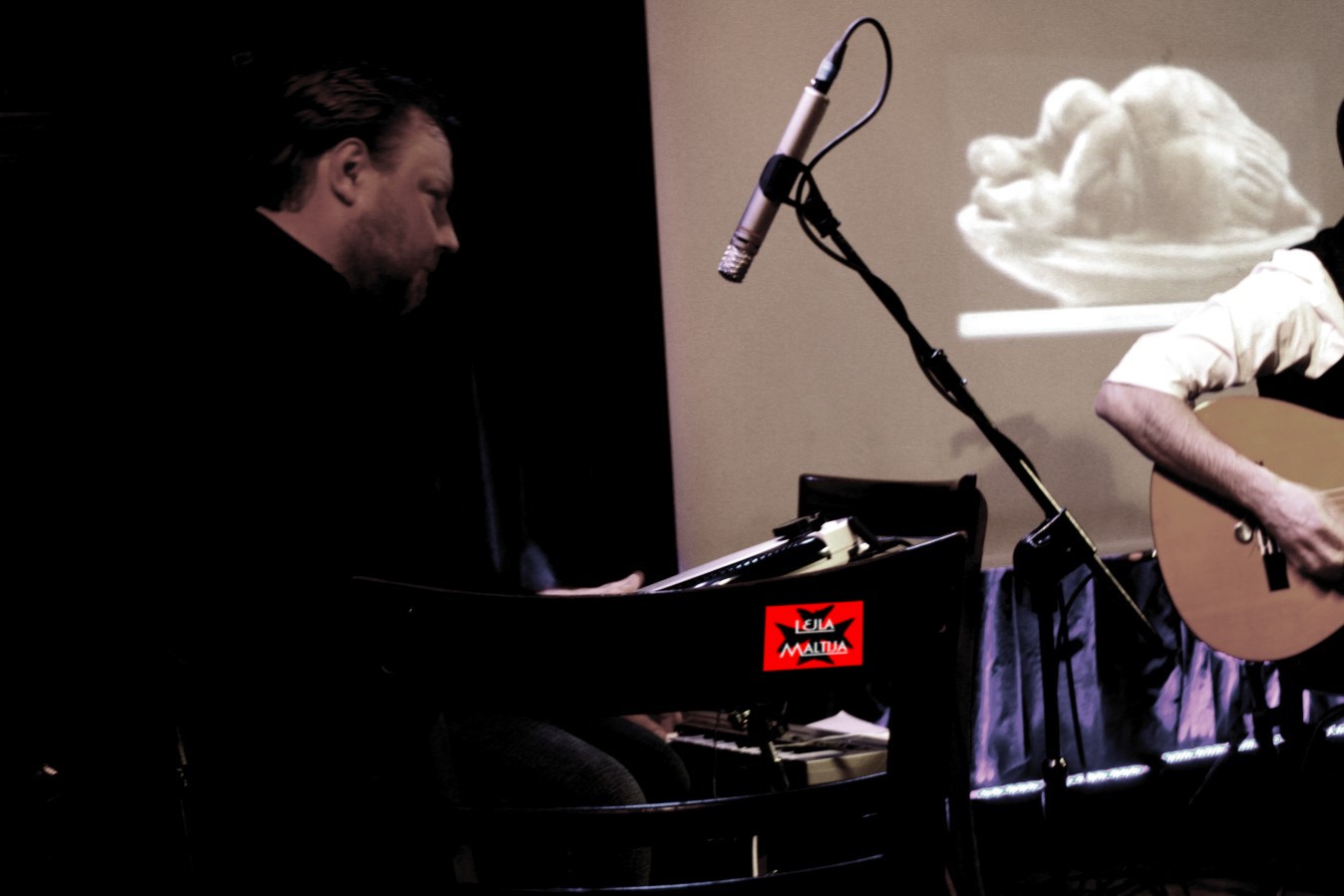
Lejla Maltija powered by Mario Cordina has burst into life with a premier concert of original music, folklore, visuals, information and food from Mario's native island Malta. Performed live at Rocker club in Szczecin, it has proved to be a success and who knows where they will go from here.

The music concept is to combine Maltese folklore and musical themes into different genres, give it a more contemporary feel to attract today's audiences. The lyrical content is about Malta's past. legends, customs, folklore, especially about traditions lost or dying out. Together with the visuals chosen, this is an attempt to educate and demonstrate that Malta has more than just beaches and sun to offer foreigners. A proud declaration from an island nation from a Maltese citizen abroad.   

Lejla Maltija is:

Mario Cordina on vocals and guitars, 'Hose' Jacek Lesiak on bass, 'Roderigo' Krzysztof Baranowski on keys and percussion, 'Manwel' Matek Mater (Mateusz Lazar) on guitars.
Check out more photos at Lejla Maltija Photos at Rocker Club

Another Anidroc Production.